Translate

Showing posts sorted by relevance for query shaputis. Sort by date Show all posts

Thursday, December 1, 2016

In re Shaputis: Elderly Parole Hearing: FOUND SUITABLE

Mr. Richard Shaputis was finally found SUITABLE  (see below) by the Board of Parole Hearings’ 2-member Panel in Chino (CIM) at his Subsequent Parole Hearing #9 and 2nd Elderly Parole Hearing on November 1, 2016.   (Represented by Attorney Diane T. Letarte)


FACTUAL / PROCEDURAL BACKGROUND: Richard Shaputis was sentenced to 17 years-to-life for second-degree murder in the 1987 shooting death of his wife. He was originally found suitable in 2006, after a State Appellate Court ordered a new parole hearing with restrictions(*) on the Board of Paroles’ exercise of discretion.

We all know the court ordeal of In re Shaputis (2008) 44 Cal.4th 1241, wherein the appellate court granted his habeas petition and ordered the Board to conduct another hearing. The Governor reversed and the Supreme Court eventually granted review and, concluded there was “some evidence” to support the Governor's reversal decision, and therefore affirmed the Governor's ruling.

Mr. Shaputis had a new Board hearing in 2009, wherein he was denied parole. The appellate court again granted his habeas petition and ordered the Board to conduct yet another hearing. On December 29, 2011, a second review in three years of a state habeas corpus petition seeking review of an adverse parole decision, the California Supreme Court again reversed the Fourth District Court of Appeal, Div. 1, which had ordered a new hearing after finding that the Board of Parole’s decision to deny parole was not supported by “some evidence.”

In 2011, the unanimous Supreme Court made several significant holdings that while Shaputis’ decision to not speak to either the Board’s psychologist or the Board itself could not per se be held against him, the absence of such information and testimony could not be used as a shield to prevent the Board, in rendering an unsuitability decision, from relying on older evidence in the record.

In the 2nd Shaputis decision, the California Supreme Court elevated “lack of insight” into a central factor for the Board to consider when determining parole suitability. The Court also substantially reduced the “wiggle room” for California courts to review challenges to lifer parole denials, except those without a “modicum” of supporting evidence anywhere in the record.


2016 – Mr. SHAPUTIS’  2nd ELDERLY PAROLE HEARING: 

Inmates who are 60 years of age or older and who have been incarcerated for 25 years or more are eligible for the Elderly Parole Program.  Mr. Shaputis is now 80 years old and has served approximately 30 years on his 17 to - Life sentence.  During the 1st Elderly Parole Hearing (2015) Mr. Shaputis was denied 3-years and then returned for an earlier hearing under the Administrative Review (AR) in 2016.

In the 2015, the Board gave only lip service to Mr. Shaputis’ diminished physical condition. During the 2nd Elderly Parole in 2016, Commissioner Zarrinnam and Deputy Commissioner Desai truly followed the Three Judge Panel in the Plata/Coleman class action lawsuit that ordered the new elderly parole process.  That ruling required giving special consideration to an eligible inmate’s advanced age, long-term confinement, and diminished physical condition.

The 2016 Panel commented about the “elephant in the room;” looking face-to-face at Mr. Shaputis (not a cold transcript). They described he was old, frail, walking with a cane (mobility impairment), hearing impaired (both ears), vocal chord impaired (whispered through the whole hearing), had liver problems, amputated thumb, and was unassigned due to his physical impairments. The Commissioner commented that it would practically be impossible for Mr. Shaputis to be an unreasonable risk of danger, if released.

Although one of the 2016 Commissioners had a bit of a problem with the limited verbal expression of “insight” and remorse - he did find the commitment offense as described by Mr. Shaputis to be plausible. The other panel member did seem to find that Mr. Shaputis admitted to murdering his wife (not an accident) even though Mr. Shaputis stated that he was playing with the real gun like it was a toy.

Additional relevant suitability factors were brought forward. They included:
  • ALL of Mr. Shaputis’ Psychological Risk Assessments concluded he was a LOW risk of violence, if released to the community. 
  • His 30 years of incarceration without any Rule Violations i.e. CDC-115s or CDC-128s.
  • No Confidential file memo.
  •  His sobriety since 1987, subsequent to the fatal shooting of his wife.
  • His realistic Parole Plans, including several transitional homes, and;
  •  His marketable skills.  
Mr. Shaputis wrote a book report on Domestic Violence. He admitted hitting his wife and getting angry. He also took responsibility for his action. He analyzed and described his character flaws. In writing on Responsibility he states: “I created the caustic person that killed my wife…. I argued about money and how she raised the girls…it did become physical and emotional.”I was so selfish in my use of alcohol to relieve my stress of family problems and work matters.”  Under his Insight Mr. Shaputis writes: “Between the alcohol and my character flaws, no one was right but me. For over 28 years, I have been trying to work on new skills. AA gave me the steps I should have understood and used many years ago.  In writing his Remorse-Apology statement he states: “I am so ashamed and very sorry, for what I did. I destroyed the life of a wonderful woman and most caring and loving mother and wife…I took Erma’s life; the alcohol did not pull the trigger, I DID… There is nothing that can justify my actions, even understanding the impact of my childhood, will not bring you back but it will assure I will never repeat this crime.”

Mr. Shaputis’ Relapse Prevention Plan discussed his internal and external triggers along with his new coping skills and he explains that alcohol was not a solution. He described his Anger issues and his distrust toward his family stemming from his childhood and his previous wife cheating on him [by getting pregnant when he already had a vasectomy.]  He discusses how he learned to be humble, understanding, and not so selfish.

For icing on the cake, Attorney Letarte hunted down Mr. Shaputis’ 1987 2nd trial transcript and read over 1100 pages to find a few interesting facts that made Mr. Shaputis’ story PLAUSIBLE regarding the shooting of his wife and the single-action “cocked” revolver, that laid on the floor next to his wife’s body. Mr. Shaputis always testified that he cocked the hammer once and pulled the trigger, not knowing the gun was “loaded” when he fired it [aiming at the fireplace]. He fired and the gun jumped out of his hands by the powerful “kick”, [possibly accidentally re-cocking the hammer]. He had never fired that revolver before, let alone the fact that the hand revolver was chambered with a .30 caliber Rifle bullet. The record corroborates that the revolver was fired only once.

Furthermore, Attorney Letarte was able to debunk the “on-going” hearsay that Mr. Shaputis mistreated all his daughters, including the alleged sexual assault. In reality he pled “nolo contendre” to a PC 647(a) “a conviction for lewd conduct in public which does not require registration as a sex offender,” a misdemeanor which was later dismissed pursuant to PC 1203.4. He was never required to register under section PC 290. Attorney Letarte quoted the following two relevant passages from the 1987 trial:

 (1987) Direct Examination Sgt. Carl Case testing the .30 Caliber revolver that killed the victim. This is a sergeant who is well versed in firing weapons.

Q. Describe for us how that shot felt when you fired the gun.
A. Well, I was quite surprised. I had never fired a revolver before that chambered a rifle round, and there was a quite a bit of a kick….
Q. How much of a kick did it have?
A. Well, pretty good; it was pretty good, pretty noticeable.

(1987) Direct Examination of Cheryl De Boe (one of Mr. Shaputis’ daughters)

Q. Directing your attention in 1978 did you ever hear your father speak to Annette (sister) about the allegations that she made against him?
A. No.
Q. Were you -- did you ever have occasion for your father to get in bed with you?
A. Did I ever have an occasion?
Q. Yes.
A. Yes, when he got the wrong room. Yes.
Q. Tell me what year that was as best you remember?
A. ’75.
Q. What happened?
A. He came into the room and got into the bed. And I said, “What are you doing in here?” and he looked confused and I said, “Get the (expletive) out of the room,” and he did.
Q. All right.  And was he drunk then?
A. Yes.
Q. And when you told him to get out, he complied with that?
A. Yes.
Q. Were you ever molested by your father?
A. No.

After deliberation the Commissioners unanimously concluded that Mr. Shaputis(**)  does not pose an unreasonable risk and found him suitable on November 1, 2016. We are now waiting for the 150 day review cycle to be completed, in hope that the Governor will take no action -- this time around!

===================================================================
* In 2006, Commissioner St. Julien, who granted parole to Mr. Shaputis pursuant to a court order stated: “I found you unsuitable in 2005 … and I think I made the right decision then [2005]…” and later in the decision Commissioner St. Julien stated: “However, today [2006] we do feel unduly burdened by this Court decision so we’re going to do the legal thing.” She then pronounced him suitable, per the court order.

** Little known facts about Mr. Shaputis. He worked many years as a foremen at the San Onofre (Nuclear plant) and traveled many weekends back and forth to San Diego, his home. On or about the day of the crime, he had worked extremely long hours and still drove home to celebrate their 23rd wedding Anniversary.  The death occurred, after they both had been heavily drinking that evening, with the victim’s blood alcohol concentration (BAC) analyzed at approximately .24, at the time of death.

Saturday, June 19, 2021

INFORMAL Parole Suitability Hearing Practical Tips (aka “TIPS”) and TIPS2 (for Covid19 correspondence course assistance)

Since our Law Office receives so many phone calls from inmates and Family members that want assistance (but may not be able to afford a private attorney)  in Preparing for the Initial and Subsequent Parole Hearings, we dedicated this June BLOG to describing Resources that our law office has compiled over many years, that may be useful to  inmates and/or the Family and Friends of the inmates.

Over our 20+ years of Law practice in the area of Post-Conviction (i.e. Parole Suitability Hearings) we accumulated different resources from many sources: including our clients, transitional homes, other Lifer advocates, etc..  We combined the materials in an informal PDF document that we named TIPS. TIPS was first released in 2012 (20 pages or so) or so; some older version are still floating around in the different prisons. 

The (619-233-3688) Law office of Diane T. Letarte has recently Revised the Original “TIPS” pamphlet entitled: “Parole Suitability Hearing Practical Tips”. The last Revision was created December 2020. It has grown to 50 pages or so, see Description below.  NOTE: Different then the TIPS2 packet described further below. After reading the TIPS / TIPS2 descriptions below, if you believe it may be helpful to an inmate (or a Family/Friend) - feel free to download it, print it, and US mail it to an inmate (or LO) for assistance in his/her Parole Hearing Preparation. 

The PDF files are Free but there is a DOWNLOADABLE small fee (~$6 - $9), which contributes to the website hosting of the two (2) .PDF documents entitled TIPS and TIPS2.

Below are the Descriptions of TIPS and TIPS2: 

TIPS:  informal INMATE resource: 

The TIPS document allow the inmates to better understand what they need to prepare for the Parole Hearing and what to expect from the Commissioners. The TIPS (2020 Edition, 49 pages).

TIPS is an easy to read document with a non-legalese approach to prepare the inmate on WHAT to expect  during the Parole Suitability Hearing (BPH). TIPS also contains SAMPLE Questions from both the Commissioners (BOARD) and the Prison Psychologist. The NEW 2020 Edition contains more information on COVID19 Video Hearings as well as Youth and Elderly Parole hearings as well as existing new 2020 law: (i.e SB1437 Felony Murder and AB3234, new elderly law). There are now 17 (as of 2021)  Commissioners appointed by the Governor who hear these Parole Hearings across all 35+ Prisons, where it is normally conducted. Soon to be increased in 2021-2022 by a two (2) more Commissioners to accommodate all the new Elderly Parole Hearings and Non-Violent 3rd strikers, among others.

We are including the Table of Contents below for your review.

Table of Contents  (for TIPS)

 
I.    INTRODUCTION    5
II. PART 1:THE PAROLE HEARING & CRIME    5
   What about COVID19 and BPH Video hearings?    6
   PRACTICAL TIPS:  Do I speak about “the crime”?    7
   What about INSIGHT?    9
   Board of Parole Hearings Sample Questions    12
III. PART 2:POST CONVICTION FACTORS    15
IV. PART 3: PAROLE PLAN    16
   Relapse Prevention Plan (RPP)    17
   The 10 Most Common Relapse Triggers    18
V. POST-CONVICTION PROGRESS REPORT    19
VI. PSYCHOLOGICAL Evaluation (CRA)    19
   Psychologist: Sample  Questions    21
VII. USE OF CONFIDENTIAL FILES    24
VIII. LAWRENCE,SHAPUTIS I,SHAPUTIS II    25
   A. In re Lawrence : 44 Cal. 4th 1181 (2008)    25
   B. In re Shaputis:  44 Cal. 4th 1241 (2008)    26
   C. In re Shaputis II  53 Cal.4th 192 (2011)    27
IX. LIFER LAWs (and other Laws)    28
   A. Marsy’s Law (A.K.A. Prop 9)    28
   B. Youth Offender Parole Hearings (SB260/261, AB1308, SB394)    29
   C.  Elderly Parole Hearing (60/25 And 50/20)    31
   D. SB1437 (Felony Murder) & Prop 47  &  Prop 57    33
     …. Filing the Felony-Murder Petition    34
    E. Administrative Review (AR) Of Hearings    36
X. THINGS TO REMEMBER    36
     Is It Time To Appeal To The Court?    38
XI. HOW CAN FAMILY/FRIENDS SUPPORT ME    38
   A1. Why/How To Write  Support Letters?    39
   A2. Parole Plan & Transitional Homes    40
   A3. Where Do I Send The Support Letters?    41
   A4. To Whom Do I Address The Support Letter?    41
   A5. How To Write A Job Offer Letter?    42
   A6. How Do I Get The Prison’s Address?    42
XII. GOT DENIED PAROLE - WHAT NEXT?    43
XIII. BLACK LIVES  MATTER - LA DA ends Opposition to Parole Grants    45
   A1.  LA's New DA George Gascón Ushers In Sweeping Changes, Less Punitive    Approach to Crime.    45
   A2.  Ending Use Of The 'Racist' Death Penalty    46
   A3. Lifer Parole Hearing Impact: LA DA To Support A Grant    47


TIPS2:  informal FAMILY resource (to help loved ones):

The TIPS2 document allow the Family/Friends to send resources (e.g. correspondence classes addresses, etc.)  to their LOs so they can better prepare for their Parole Hearing and what to expect from the Commissioners. The TIPS2 (2020 Edition, 59 pages).

From different engagements that we were invited to speak at -->  one time or another, such as Families of the Incarcerated, among other venues, we received many questions from family members and friends. The recurring theme is always asking: “ What can we do to help our Loved Ones “LO”?”.   We subsequently created a separate and informal document that we named TIPS2.

Subsequently with COVID19 and the Prison movement restrictions, inmates had little (or no) Group or individual self help classes available to increase their Rehabilitation. We enhanced TIPS2 so that  Friends/Family (on the outside) can assist their LO, by providing them with the name of correspondence classes, Books to read for Book Reports, writing appropriate support letters, etc..

The Resource pages included in this Practical informal TIPS2 packet are from all different sources that our office as acquired over several years, to assist our Long Term Offender (and Lifers) clients.   This packet contains several different topics; Book List, Book Report Sample, Correspondence classes address, Transitional Housing resources, CDCR Mental health system assistance for in-cell classes. It also contains courtesy Sample excerpts of  the ECC, LSA, and POSSE newsletters; if you chose to subscribe to them for your Loved One, please contact the Newsletter staff directly. There is a separate CLN (older California Lifer Newsletter sample) that is now published by LSA; you can also request a Subscription for CLN.  These Newsletters are published and mailed to the prisons; your LOs maybe familiar with them. We are including the Table of Contents below for your review.

  Table of Contents  (for TIPS2)

I. INTRODUCTION    4
II. Parole Hearing Guidelines    5
    Apology Letter(s)    5
    Relapse Prevention Plan (RPP)    6
    The 10 Most Common Relapse Triggers    7
    Board Of Parole Hearings - QUESTIONS    8
III. CALIFORNIA AVAILABLE NEWSLETTERS    11
   A1. LSA NEWSLETTER - SAMPLE    11
   A2. PLU MAX- POSSE NEWSLETTER - SAMPLE    20
   A3. ECC  NEWSLETTER - SAMPLE    23
   A4. CLN CA LIFER NEWSLETTER [2017 Excerpts]    25
IV. Correspondence Self-Help classes    33
   A1. PREP correspondence courses    33
   A2. LSA correspondence courses    33
   A3. MAX PLU - POSSE  correspondence courses    35
   A4. CDCR - Mental Health Delivery System (MHDS)    38
   A5. CRIMINON  correspondence courses    40
   A6. FREE  correspondence courses    43
V. BOOK LIST and BOOK REPORTS    45
    Book List    45
    Book Report - Sample    48
VI. Is It Time To Appeal To Court?    49
VII. SUPPORT LETTERS    50
   A1. Why/How To Write  Support Letters?    50
   A2. Parole Plan & Transitional Homes    51
   A3. Where Do I Send The Support Letters?    52
   A4. To Whom Do I Address The Support Letter?    53
   A5. How To Write A Job Offer Letter?    53
   A6. How Do I Get The Prison’s Address?    54
VIII. GOT DENIED PAROLE - WHAT NEXT?    56


DISCLAIMER1: 

The Law Office of Diane Letarte has no affiliations with any of the Newsletters. We do not promote (or endorse) any one resource over another. Some have correspondence classes are Free and others have a small fee for their services. Some Newsletters may be available or not. It is up to the reader to to the foot work and contact the individual entities for the latest information.

=========================================================

DISCLAIMER2:  -->


Please pardon any inconsistent formats in our TIPS and TIPS2. TIPS2 was created (during COVID19 pandemic) to get information out to the inmates’ Families so they can assist their Loved Ones for their Parole Hearing;  parts/sections were from different sources and formats.  Keep in mind, this is intended to be an “informal practical TIPs” document. We have no Editor or Publisher. The Attorney and staff are working “on their own free time” to try to gather the information for the inmates and/or Families of the incarcerated.
 

Wednesday, March 28, 2012

In re WING 1/5/12: 4th District Div 1 strikes back after SHaputis II

FACTS:

In 1995, a jury convicted James Wing of second degree murder and also found he personally used a firearm to commit the offense. The court sentenced him to prison for 15 years to life, plus a four-year enhancement under section 12022.5, subdivision (a). Wing, at age 41, began serving his indeterminate term in 1995 and participated in an initial parole consideration hearing on January 13, 2010. The Board of Parole Hearings (the Board) found Wing unsuitable for a release date and denied him parole, setting a new suitability hearing in three years.

After the trial court denied a request for habeas relief, Wing filed the present petition for writ of habeas corpus. Wing asserts the Board's conclusion is not supported by some evidence that, if paroled, he currently would pose an unreasonable danger to the public. He also contends the application of Marsy's Law to increase his time between parole suitability hearings violates the federal and California Constitutions' ex post facto provisions. We need not discuss the latter contention because we conclude the record does not contain "some evidence" to support the Board's ultimate conclusion that Wing was unsuitable for parole because he currently poses an unreasonable risk to public safety.

Accordingly, we grant Wing habeas relief.


THE BOARD'S DENIAL IS NOT SUPPORTED BY SOME EVIDENCE

In this case, because the court below denied Wing's petition for a writ of habeas corpus, the current petition for habeas relief is an original proceeding that requires we independently review the record to determine whether there is some evidence to support the Board's decision in denying Wing parole. (In re Scott (2004) 119 Cal.App.4th 871, 884.) In other words, "we independently review the record [citation] to determine 'whether the identified facts [by the Board] are probative to the central issue of current dangerousness when considered in light of the full record before [the Board].' [Citation.]" (Vasquez, supra, 170 Cal.App.4th at pp. 382-383.)


ANALYSIS by the Court

The parties disagree as to the factors the Board relied on in denying Wing parole. The Attorney General argues the Board relied on both the circumstances of the commitment offense and Wing's purported lack of insight. Wing, claims the Board only relied upon his lack of insight of the causative factors of the life offense in denying him parole.

A- CIRCUMSTANCES OF THE LIFE CRIME

The Board clearly referenced the circumstances of the life crime in supporting its decision. "As far as the offense goes, it was a very reckless offense, a murder." The Board then again described in detail the facts of the life offense. We thus conclude the Board was stating, perhaps inartfully, it was relying upon the circumstances of the commitment offense in support of its denial. There would have been no reason to repeat the facts of the life offense in detail otherwise.

Even assuming the Board found that Wing committed the life offense "in an especially heinous, atrocious or cruel manner," this factor does not support the Board's denial on this record. The commitment offense predates incarceration and is immutable. In Lawrence, supra, 44 Cal.4th 1181, the court explained that parole for murderers is the rule, not the exception, and therefore, the immutable aggravated circumstances of an offense alone rarely will provide a valid basis to deny parole after an inmate has served
the suggested base term and when there is strong evidence of rehabilitation and no other
evidence of current dangerousness.

Simply put, the Board's reliance on the circumstances of the life offense must be combined with some other evidence of current dangerousness. (Lawrence, supra, 44 Cal.4th at p. 1214.) On the record before us, we have no other indication of Wing's current dangerousness. As such, we conclude the circumstances of the life crime, committed some 15 years prior to the 2010 suitability hearing, without additional evidence, have little probative value regarding Wing's dangerousness to society if released.

B - MINIMIZATION/LACK OF INSIGHT

A prisoner's insight into his offenses and his understanding of the nature, magnitude and causes of his crime are important parole suitability factors. (In re Rodriguez (2011) 193 Cal.App.4th 85, 97.) Further, a "petitioner's current attitude toward the crime constitute[s] [a] factor[] indicating unsuitability for parole." (Shaputis, supra, 44 Cal.4th at p. 1246.) A conclusion that a petitioner remains dangerous and is
unsuitable for parole can be supported by evidence that, among other things, the petitioner "is unable to gain insight into his antisocial behavior despite years of therapy and rehabilitative 'programming.' " (Id. at p. 1260.) However, expressions of insight and remorse will vary from inmate to inmate and there are no special words for an inmate to articulate to communicate he or she has committed to ending a previous pattern of violent or antisocial behavior.

The Supreme Court has recently discussed the "lack of insight" on the part of inmates and how the Governor or parole authorities may use lack of insight in parole decisions. (In re Shaputis (Dec. 29, 2011, S188655) ___ Cal.4th ___ [2011 DAR 18585] (Shaputis II).) In that case, the court reaffirmed the requirement of judicial deference to executive branch decisions regarding paroles. The court noted parole authorities can use this factor as a basis of a parole denial and that judicial review is limited to determining
whether there is a modicum of evidence to support the executive decision. The court recognized lack of insight may be an indicator of current dangerousness.

Shaputis II, supra, ___ Cal.4th ___ [2011 DAR 18585] does not require us to defer to the Board's decision based on lack of insight. It is apparent from a review of the record, as noted below, there is no evidence of a current lack of insight on the part of Wing. Indeed, the entire discussion by the Board focused on the events surrounding the commission of the life offense. Those events are relevant to parole review, but nothing in
the Board's analysis supports a finding of current dangerousness based on a lack of insight at the time of the offense.

CONCLUSION

But for the immutable nature of his life crime and the unsupported determination by the Board that he lacks insight, all the applicable regulatory criteria indicate that Wing is suitable for parole. (Cal. Code Regs., tit. 15, § 2402, subd. (d).) Wing has been a model prisoner since 1995. He has addressed the anger that led to his life offense via self-help, vocational and educational programs, and therapy. He has no prior criminal
record or assaultive behavior, has no current mental health issues, and has remained discipline free in prison for over 15 years. The psychological evaluator concluded that Wing is a very good candidate for parole and would unlikely reoffend, finding him to be in the very lowest risk group for violence if released. The Board was satisfied with Wing's parole plans. The evidence at the hearing showed that Wing was credible, remorseful and that he had insight into his crime for which he accepted full responsibility. Given the undisputed evidence of Wing's rehabilitation and the lack of some evidence of current dangerousness to support the Board's decision, we are compelled to conclude under the standards adopted by Lawrence, supra, 44 Cal.4th 1181, and applied in this case, that the Board's decision is not supported by some evidence and therefore violated Wing's due process rights. Accordingly, Wing is entitled to habeas relief. Because the Board's finding of no suitability for parole has no evidentiary support, it cannot stand.

Accordingly, the Board's decision denying parole is vacated and the matter is remanded to the Board for a further hearing in accordance with due process standards as articulated in In re Prather (2010) 50 Cal.4th 238.

Monday, September 21, 2009

Proposition 9 (Marsy's Law) impact on Inmates

The Impact of Proposition 9 (a.k.a. Marsy’s Law)
on Lifer Parole Suitability Hearings
Written by : Diane T. Letarte, MBA, LLM

WHAT IS Prop-9?:
On November 4, 2008, California voters were apparently swayed by emotion into passing Proposition 9, the Victims’ Bill of Rights Act (“Act”). While the proposition’s title is admittedly appealing and evokes understandable sympathy for the silent and defenseless, the Act’s actual language raises serious constitutional questions. California Penal Code 3041.5 , The Act simplistically treats ALL lifers equally, regardless of the individual facts or any extenuating circumstances. Additionally, the focus on Life Parole Hearings belies available research and leaves the misimpression as to the proportion and danger of the “Lifers” as parolees. Nevertheless, despite grave concerns, effective November 5, 2008, California Penal Code section 3041.5 is amended, increasing the parole-denial periods to which life prisoners could be subjected

The Act is comprised of five separate parts, apparently each section written in a manner intended to evoke an emotional response to gain support:

The first main part “preyed heavily n emotions, The strong undercurrent running through this section decries California’s criminal justice system because (1) it treats victims very poorly, (2) all past reform efforts failed to improve victims’ treatment; and (3) the parole system is too easy on criminals.

The second main part, Sections 4 and 4.1.,
purports to considerably expand victim’s rights, making them enforceable by victims and their lawyers.

The third main part of Proposition 9, its Sections 5 and 5.1 to 5.3,
concerns the rights of victims in the parole process; this third part substantially alters the parole process. The primary focus on the Lifer Parole Hearing process leaves the dubious impression that this prison population constitutes the largest threat.
The fourth main part of Proposition 9, at its Section 6, the “Notice of
Victim’s Bill of Rights,” concerns notifying victims of their rights.

The fifth main part deals mainly with conflicts, retroactivity, severability and amendment clauses.

Proposition 9 was procedurally implemented by the BPH on December 15, 2008 for the Lifer Parole Suitability Hearings.

WHAT PENAL CODE SECTIONS ARE IMPACTED?:

One undisputed consequence of the Act is to substantially extend prison time for those serving indeterminate sentences. Prior to Prop 9’s enactment, defendants plea bargained accepting certain universally accepted assumptions by all those associated with the conviction process only to discover fifteen years or more on that these “rules” have substantially changed.

Under the former Penal Code section 3041.5 life prisoners who were not convicted of murder could be denied parole for 1 or 2 years, and lifer prisoners who were convicted of murder could be denied parole for 1, 2, 3, 4, or 5 years. Under amended section 3041.5. ALL life prisoners can be denied parole 15, 10, 7, 5, or 3 years. Parole Hearing are now by default every 15-year after any hearing which a parole is denied, unless the BPH can show by “clear and convincing” evidence that the inmate does not require a more lengthy period of incarceration. If that evidence is shown, then the BPH may proceed to set the next denial in the order of 10, 7, 5, and finally 3-years based upon the same criteria.

Although numerous sections remain unchanged, there are two notable exceptions. Penal Code section 3041.5 sets forth the parole-grant hearing rights of prisoners. Penal Code section 3043 requires notice to the victim, and states other victim’s rights. These two sections are substantially amended by Prop 9. Additionally, Prop 9 adds new Section 3044 to the Penal Code, setting forth additional victim’s rights during the parole process.

LITIGATION EFFORTS:

Since the Act’s passage, serious constitutional concerns have been expressed concerning Proposition 9. At this time there are over 20 cases taken up on appeal via Writs directly from the unsuccessful Lifer Suitability Hearings. There are also three other known courts in which litigation has been filed on the early offset of Proposition 9 and they are seeking to enjoin implementation of Prop. 9’s anti-lifer provisions.

1. Rutterford/Lugo (case Amended for Prop. 9)
-Keith Whattley, esq. 220 4th St, ste 201 Oakland, CA 94607

2. Federal Defender (Eastern District) in Gilman et al. V. Schwarzenegger et al. (CIV-S-05-830 LKK GHH)
Federal Defender - Eastern District with the UC Davis Law School of Civil Rights Clinic (Section 1983)
-Monica Knox Monica_knox@fd.org

3. Taxpayers for improving Public Safety (Tips) v. Schwarzenegger et al. filed a civil lawsuit (12/2008) 34-2008-00030789-CU-JR-GDS (injunction relief).
-Steve Sanders, esq. 916-376-8738

SOME RELIEF:

On March 27, 2009, in the class action lawsuit involving LATE parole hearings (In re Rutherford, Marin County Superior Court NO Sc135399A) the BPH agreed that all the parole hearings that were due to be held prior to Proposition 9 on December 15, 2008 would now be entitled to “pre-9” hearing decision.

Voluntary waivers have not been modified by Proposition 9. In the California Code of Regulations (CCR): Title 15. Division 2, Chapter 3, Article 3, Section 2253 (15 CCR section 2253) Voluntary Waivers, Stipulations of Unsuitability, Postponements, and Continuances prisoners still have the right to Waivers. A prisoner may request to voluntarily waive his or her life parole consideration hearing for any reason. Request shall be made in writing to the Board and shall state the reason for the request. A prisoner may request to waive his or her hearing for 1, 2, 3, 4, or 5 years. A request made no later than 45 days prior to the scheduled hearing SHALL be PRESUMED to be valid.

These timeframes are very important and needs to be analyzed by an experienced attorney in this field. This tool can be used as a long term strategy to position your client in a better light at his next full Board hearing. If s/he is denied at the full hearing than the appropriate Writ of Habeas Corpus (WHC) can be filed in a timely manner with the appropriate issues raised, for appropriate Court relief.

On August 21, 2008, the California Supreme Court published its decisions in the cases of In re Lawrence, 44 Cal. 4th 1181 and In re Shaputis, 44 Cal. 4th 1241. It provides more potential relief at the parole hearing for inmates that have been previously denied solely based on their immutable factors, one being the commitment offense.

A. In re Lawrence :

Inmates have a protected liberty interest in parole. Due process guarantees a meaningful judicial review and that the judicial standard of review for a BPH denial of parole and/or the Governor’s reversal of Parole Grant remains the “some evidence” standard of review.

Some clarification received by this case is that a denial (or reversal by the Governor) of a parole grant must be based on “an assessment of an inmate’s current dangerousness. The commitment offense ALONE can not be used to deny parole UNLESS, there is a nexus between the immutable factors and the inmate’s current dangerousness. The unsuitability factors used at a Lifer parole hearing can be reviewed under 15 CCR §2402.

From a practical point, the attorney representing the inmates at their lifer parole hearing must make sure that they properly present all the positive (suitability) factors. These include but are not limited to: programming, vocational trades acquired, self-help classes completed, positive laudatory chronos received as well as all the AA/NA meeting attended. In addition, show the lack of CDC-115 (a.k.a. rules infraction as part of institutional behavior) on the inmate’s part during his period of incarceration. All these positive aspects will be needed to outweigh any unsuitability factors in order to be deemed suitable and not be deemed a current risk of danger to society.

The California Supreme Court approved the decision of the U.S. 9th Circuit Court of Appeals in Biggs v. Terhune (2003) 336 F.3d 910. This is a federal landmark case in the Parole process.

B. In re Shaputis:

This is the companion case to Sandra Lawrence. Richard Shaputis appears to be the “take” portion of the “give and take” offered up by the California Supreme Court in August 2008 to demonstrate that its decision in Lawrence does not “open the flood gates” of parole for lifer inmates.

In reversing the appellate court’s grant of parole to Mr. Shaputis, the Supreme Court concluded that because of a “lack of insight” into the commitment offense and a pattern of “sometimes violent behavior,” the inmate continues (currently) to be an “unreasonable risk” to public safety.

From a practical standpoint, the attorneys representing Lifers will need to closely scrutinize any and all Psychological evidence presented at the parole hearings. The BPH has their own contracted Forensic Psychologists to interview the inmates in a non-confidential setting to provide a report and recommendation as to the risk of violence in society if the inmate is release. The inmate’s psychological evaluation is now being given more weight and on many occasions is used to eviscerate the insight previously gained by the inmates (by prior positive psychological evaluations) in order to shoehorn the In re Shaputis decision to BPH’s favor, for denying parole.

==================================================
LIFER HEARING PRELIMINARY OBJECTIONS (making a record):

Attorneys representing Lifers at their Parole Suitability Hearing in the near future need to create the proper record that raises potentially appealable issues or serves as a basis for bringing a Writ of Habeas Corpus. Preliminary Objections recommended at the beginning of the Parole Suitability Hearing include the objections that new Proposition 9 violates the right to Confrontation, a.k.a. the 6th amendment rights, and the inmates’ Liberty interest in Parole, and others.


SUMMARY

While sympathetic to the emotional outrage felt by victims and their friends and family by crimes committed by recidivists, Proposition 9 unfairly targeted Lifers, a population which research supports as an extremely small and arguable less dangerous segment of the potential parole population. Not only has the Act failed to address the real objective of denying parole to truly dangerous criminals, its implementation violates constitutional guarantees, arguably constituting the greater danger to a free society.

Outside of the hearing itself, fervent opposition to the confirmation of new Commissioners that do not follow the law, are bias and/or unfair at the Parole Hearings must occur. The defense bar’s disapproval of retired law enforcement personnel’s disproportionate representation on the Board of Parole Hearings should be communicated to the Senate Committee on Rules in Sacramento.

We represent inmates at their Parole Revocation or Lifer Hearings and provide WHC relief, when appropriate. We successfully have released multiple Lifer inmates via the Parole Hearing Process, En Banc Hearings (in Sacramento) and via the Court system.
We have personally met (not represented) Mr. John Dannenburg (156 Cal. App. 4th 1387) and we discussed his struggles especially over the last 7 years in court (2002-2009) as a jailhouse lawyer. He was released 6 months ago from a 15-Life, 2nd degree murder sentence, he had served over 23 years. We also briefly spoke with Mr. Hayward (currently released) who is currently pending in the Federal Courts. Both are Landmark cases in this area of post-conviction law.

Tuesday, October 6, 2009

In re Phillips - Remedy when Court Orders new hearing?

The In Re Phillips is a crucial case in that it addresses multiple BPH issue for the inmates.
Specifically one of the issue it deals with - WHAT remedy an inmate will receive from the Court once he has received an OSC?

In doing HC - Prayer normally follow a 3-prong approach similar to this:
1) Grant a new Hearing with the correct legal standard ( Lawrence/Shaputis)
2) Grant a new Hearing to set a Parole Date UNLESS new evidence show unstuitability
3) Grant a Hearing to set a Parole Date and release forthwith.

Different Courts have used different remedies. Hopefully this case will shed some light and consistency. Below are the minutes of the CA Supreme Court for this case.
=========================
August Supreme Court Minutes:

S173519 B215004 Second Appellate District, Div. 4 PHILLIPS (AHMAD) ON H.C.
Petition for review granted; transferred to Court of Appeal, Second Appellate District, Division Four, with directions to issue an order to show cause.

The petition for review is granted.

The matter is transferred to the Court of Appeal, Second Appellate District, Division Four. That court is ordered to vacate its summary denial dated May 21, 2009, and is further ordered to issue an order to show cause, returnable before the Los Angeles County Superior Court. The Director of Corrections and Rehabilitation is to be ordered to show cause, when the matter is placed on calendar, why the Governor did not abuse his discretion in reversing the Board of Parole Hearings’ July 2008 determination that petitioner was suitable for parole, including his determination that petitioner lacked insight with respect to the commitment offense, and why the Board’s decision to grant parole should not be reinstated. (See In re Lawrence (2008) 44 Cal.4th 1181; In re Shaputis (2008) 44 Cal.4th 1241, 1259-1260; In re Palermo (2009) 171 Cal.App.4th 1096.) The return is to be filed on or before September 11, 2009.


Thursday, January 12, 2012

In re Shaputis (II) 12/29/11 - Difficult case for LIFERs

Case Name: In re Shaputis (II) , CalSup , Case #: S188655
Opinion Date: 12/29/2011 , DAR #: 18585

Although the case is not very favorable to the Lifers there is a very good concurring opinion from Justice Liu, J. that almost sounds like a dissent, thus, giving golden nuggets of advice. See the short extract below:

CONCUR BY: Werdegar; Chin; Liu

The emphasis on judicial deference is part of the court's effort to summarize the principles governing judicial review of parole decisions. Because today's opinion focuses on the obligations of reviewing courts, I think it useful and complementary to summarize a few principles governing the Board's obligations as well.

As we have repeatedly said, the parole statute and regulations put the onus on the Board to justify denial of parole: " '[T]he governing statute provides that the Board must grant parole unless it determines that public safety requires a lengthier period of incarceration for the individual because of the gravity of the offense underlying the conviction. (Pen. Code, § 3041, subd. (b).) And as set forth in the governing regulations, the Board must set a parole date for a prisoner unless it finds, in the exercise of its judgment after considering the circumstances enumerated in section 2402 of the regulations, that the prisoner is unsuitable for parole. Accordingly, parole applicants in this state have an expectation that they will be granted parole unless the Board finds, in the exercise of its discretion, that they are unsuitable for parole in light of the circumstances specified by statute and by regulation.' (Rosenkrantz, supra, 29 Cal.4th at p. 654, [*60] italics added; see also In re Smith (2003) 114 Cal.App.4th 343, 366 ['parole is the rule, rather than the exception'].)" (Lawrence, 44 Cal.4th at p. 1204.)

In light of this basic statutory obligation to grant parole unless public safety is at risk, we have held that the Board, as a matter of due process, has a duty to provide "a definitive written statement of its reasons for denying parole." (In re Sturm (1974) 11 Cal.3d 258, 272.) The requirement of a definitive written statement of reasons serves two functions.

First, it serves to "adequately inform the inmate" of the reasons for the denial (ibid.) so that the inmate is given a fair opportunity to make the life changes necessary to be considered suitable for parole in the future.

Second, the requirement fulfills the "mandate that a basis for administrative action must be set forth with sufficient clarity as to be understandable" so as "to afford an adequate basis for judicial review." (Ibid.) Although the Board is not required to "comprehensively martial the evidentiary support for its reasons" (maj. opn, ante, at p. 24, fn. 11), it is required to point to evidence in the record that supports its reasoning. Otherwise, the statement of reasons would be conclusory and would fail to concretely inform the prisoner and the reviewing court of the Board's decision-making process.

The Board's obligation to provide a definitive written statement of reasons for denying parole shapes the nature of judicial review. As we said in Lawrence, the task of reviewing courts is to "determine whether the facts relied upon by the Board or the Governor support the ultimate decision that the inmate remains a threat to public safety" (Lawrence, supra, 44 Cal.4th at p. 1213) and specifically to determine whether the Board's or the Governor's decision includes "reasoning establishing a rational nexus" between identified unsuitability factors and current dangerousness (id. at p. 1210).

In other words, the focus of judicial review is on the rationality of the Board's or the Governor's decision-not only the ultimate conclusion of current dangerousness - but also the evidence and reasoning on which the Board or Governor actually relied to reach that conclusion


Case Holding:

The Court of Appeal erred in re-weighing the evidence relied upon by the executive branch when it found petitioner unsuitable for parole.

Petitioner was convicted of the second degree murder of his wife in 1987 and sentenced to 15 years to life, plus two years for a gun use. The Governor's reversal of petitioner's 2006 grant of parole was reversed by the Court of Appeal.

On review the Supreme Court found the question in determining suitability for parole is whether the inmate currently poses a public safety threat. This issue is directed to the executive branch -- first to the BPH and then to the Governor, who may review the entire record in evaluating the inmate's progress during incarceration.

The inmate's insight into the life crime is a relevant factor in determining current dangerousness. An inmate's decision not to participate in the parole hearing or psychological evaluations prepared for the hearing may not be held against him, but such lack of involvement does not limit the BPH or the Governor in their evaluation of the evidence.

A court reviewing a parole determination must employ the highly deferential "some evidence" standard, which requires it to uphold the executive branch's decision as long as there is a "modicum of evidence" to support the parole suitability finding. The question whether the inmate is currently dangerous is reserved to the executive branch. The reviewing court is not authorized to reweigh the evidence -- it must uphold the parole suitability finding if "there is a rational nexus between the evidence and the ultimate determination of current dangerousness." Reversed.

Wednesday, May 16, 2012

In re Pugh 3/22/12, LIFERS do not always have to talk about the crime but should participate at the Hearing.

In re Pugh (2012), Cal.App.4th No. C066229. Third Dist. Mar. 22, 2012.] In re WILLIAM JON PUGH, On Habeas Corpus. (Superior Court of Sacramento County, No. 10F00495, Cheryl Chun Meegan, Judge.)

ONE MORE WIN FOR THE LIFERS!

Even if the Lifer chose not discuss the crime, he can still show insight by participating in the hearing. The AG also tried to argue that Pugh's lack of insight is evidenced by his varied depictions of the crime, his continued denial of culpability, and his problematic psychological evaluations. The Court found no evidence to support any of these assertions.  READ ON!

The Governor does not get a second bite at the apple. His reversal is vacated and the GRANT of Parole by the Board is re-instated. The Lifer is to be release per the BOARD's conditions.


=======================================================================
OPINION

Charged with first degree murder, William Jon Pugh was convicted of second degree murder and sentenced to 15 years-to-life plus two years. At the time of the murder in April 1986, Pugh was 18 years old. He spent the next 24 years in prison before being released at age 42 pending this appeal.

 The Board of Parole Hearings (the Board) granted parole in October 2009. Governor Arnold Schwarzenegger reversed the Board's decision the next month. Pugh filed a writ of habeas corpus in the trial court, which was granted. The warden of the Deuel Vocational Institution where Pugh was housed at the time of the Board hearing filed this appeal from the judgment of the trial court granting the writ.

We shall affirm the judgment of the trial court. Appellant argues Pugh's current dangerousness is evidenced by his lack of insight into the offense combined with the heinous nature of his crime. We find no evidence in the record that Pugh currently lacks insight into his offense. Furthermore, we find no evidence of any recent history of lack of insight. Appellant's claim that the lack of insight makes the heinous nature of the crime probative to Pugh's current dangerousness must, therefore, be rejected. Because the nature of the offense is no longer an accurate indicator of current dangerousness, the trial court correctly granted Pugh's petition for writ of habeas corpus.  

REMEDY

The trial court ordered the Governor's decision reversed and vacated, and the Board decision reinstated. Appellant argues that if we affirm the trial court, the proper remedy is to remand to the Governor to proceed in accordance with due process. Appellant cites In re Prather, supra, 50 Cal.4th at pages 257-259, {Slip Opn. Page 24} in which the Supreme Court held that when a court reverses a determination of unsuitability by the Board it is limited to ordering the Board to conduct a new parole suitability hearing in accordance with due process of law. However, Prather has no application to the Governor's reversal of the Board. Prather expressly acknowledged that its prior decisions "did not determine the proper remedy when a reviewing court grants a petition for writ of habeas corpus on the basis that the Board's decision to deny parole was not supported by some evidence of current dangerousness" because the prior decisions "addressed the Governor's reversal of a grant of parole by the Board."

 Instead, the Supreme Court has tacitly approved the remedy of reinstating the Board's decision when the Governor's reversal is not supported by some evidence of current dangerousness. In Lawrence, supra, 44 Cal.4th at page 1190, as here, the Governor reversed the Board's decision to grant parole. The Court of Appeal granted the inmate's habeas corpus petition and reinstated the Board's decision. The Supreme Court affirmed the judgment of the Court of Appeal. Thus, the disposition was to reinstate the Board's decision, and not to remand the case to the Governor.  

DISPOSITION

The judgment is affirmed. Hull, J., and Murray, J., concurred.

This court denied appellant's petition for writ of supersedeas and request for temporary stay of the trial court order vacating the Governor's decision on November 4, 2010. Pugh was released from custody the following month.

Further references to an undesignated section are to the Penal Code. Section 5011, subdivision (b) states: "The Board of Prison Terms shall not require, when setting parole dates, an admission of guilt to any crime for which an inmate was committed." The factors tending to show unsuitability for parole are that the prisoner: (1) committed the offense in an especially heinous, atrocious, or cruel manner; (2) possesses a previous record of violence; (3) has an unstable social history; (4) previously has sexually assaulted another individual in a sadistic manner; (5) has a lengthy history of severe mental problems related to the offense; and (6) has engaged in serious misconduct while in prison. (Cal. Code Regs., tit. 15, § 2402, subd. (c).)

The factors tending to show suitability for parole are that the prisoner: (1) does not possess a violent juvenile record; (2) has a reasonably stable social history; (3) has shown signs of remorse; (4) committed the crime as the result of significant stress in his life, especially if the stress has built over a long period of time; (5) committed the criminal offense as a result of battered woman syndrome; (6) lacks any significant history of violent crime; (7) is of an age that reduces the probability of recidivism; (8) has made realistic plans for release or has developed marketable skills; and (9) has engaged in institutional activities indicating an enhanced ability to function within the law upon release. (Cal. Code Regs., tit. 15, § 2402, subd. (d).)

At oral argument, counsel for appellant brought up an additional claimed inconsistency not mentioned in the Governor's reversal-- that the victim's pants were not unzipped when the body was found. The only evidence regarding this fact that we have been able to find in the record presented to us is in our earlier opinion affirming Pugh's underlying conviction. We have granted appellant's request that we take judicial notice of the opinion. Even so, the opinion does not provide evidence of any inconsistency. The only reference to the victim's pants being unzipped is a statement in the opinion that the victim "apparently started to unzip his pants[.]" (Italics added.) There is no clear inconsistency. The opinion indicates that the victim started to unzip his pants, not that he did unzip them. Because of the impreciseness of the English language, this reference could mean the victim made a motion as if to unzip his pants, or that he grabbed his zipper, but never unzipped his pants, or that he partially unzipped his pants. In any event, the Governor did not rely on this fact for his reversal, and it cannot be viewed as an inconsistency that would render Pugh's version of events implausible.

At oral argument, appellant's counsel stressed that Pugh refused to talk about the circumstances of the commitment offense in his parole hearing. In Shaputis II, supra, 53 Cal.4th 192, this was an issue because Shaputis refused to give any testimony at his parole hearing and refused to be interviewed by the psychologist appointed by the California Department of Corrections and Rehabilitation. (Id. at p. 199.) Instead, he presented a written statement at the hearing prepared with the help of his counsel and hired his own psychologist, who submitted a report.  Because these differed from older reports and statements in the record, the Supreme Court held that if the Board relied on the earlier reports in the record, the courts could not choose to rely on the later reports instead.

The court stated, "often the most recent evidence as to the inmate's level of insight will be particularly probative on the question of the inmate's present dangerousness, but that is not necessarily the case. If the newest evidence is unreliable or insubstantial, the parole authority is not bound to accept it." (Ibid.) The court noted that if the inmate refuses to participate in the hearing, the parole board must base its decision on other information. Such other information is not limited to the information the inmate chooses to present, and the Board may weigh the credibility of such information against the other evidence in the record.

 In this case, Pugh did not refuse to participate in the hearing at all, but only declined to discuss the circumstances of the crime. He discussed the circumstances of the crime in his parole hearing the year before, in 2007, and the record contains psychological evaluations prepared for the Board in 2007 and 2008. There was no issue here of ignoring newer, inconsistent evidence because it was submitted by Pugh. To the extent appellant argues the inmate's decision to refrain from discussing the circumstances of the offense gives the Governor carte blanche to ignore later evidence and rely only on the earliest psychological evaluations and the inmate's earliest statements about the crime, we disagree. 

=========================================================================  
NOTE:  For full opinion DISCUSSION

See In re Pugh (2012) , Cal.App.4th [No. C066229. Third Dist. Mar. 22, 2012.]
 In re WILLIAM JON PUGH, On Habeas Corpus.
(Superior Court of Sacramento County, No. 10F00495, Cheryl Chun Meegan, Judge.)

SOURCE: : http://login.findlaw.com/scripts/callaw?dest=ca/caapp4th/slip/2012/c066229.html

Thursday, June 21, 2012

BPH's FAD "civilly" SUED IN FEDERAL COURT (Johnson v Shaffer)

The FAD (Forensic Assessment Division) unit of the Board of Parole Hearings (BPH) have been applying unlawful procedures to consider  LIFER suitability for parole on an on-going basis. In late April 2012 Attorney Wattley filed a Federal civil rights action (http://dockets.justia.com/docket/california/caedce/2:2012at00551/237977/ ) against FAD. The Sixth Cause of Action notes the BPH refuses to record and transcribe psychological evaluation interviews: Our office was in the forefront, since the 2008 Shaputis decision to repeatedly call for recordings of the Psychological evaluation and/or to have Counsel present at the Psychological evaluation.

Attorney Letarte has been respectfully Denied by BPH many requests to be present or to record the Psychological evaluation of her clients. Attorney Letarte,  currently has a Writ (WHC) in the SUPERIOR COURT OF CALIFORNIA COUNTY OF SAN BERNARDINO alleging among other causes that Petitioner (Lifer inmate) is Entitled to Have Counsel Present at His BPH Psychological Evaluation Pursuant to the Fifth, Sixth and Fourteenth Amendments to the United States Constitution. The Court requested the AG to file an informal response by 5/24/12.
STAY TUNE on the State side!

LSA (Life Support Alliance) is another entity who has repeatedly and publicly, in the monthly Executive Meeting of the BPH, called for such recordings and put this call on the public record. In another Cause of Action the Federal civil lawsuit suit notes the tests used in FAD evaluations are not standardized and are arbitrary, an argument LSA made forcefully in public BPH considerations of approving Title15 Section 2240. (For more LSA information see http://www.lifesupportalliance.org/mission.html )


In Psychological Rebuttal letters that our law office offer, (http://www.dianeletarte.com/Psych-Legal%20Rebuttal)  with the help of Independent Forensic Psychologists we have found many Rookie errors (among others) made by FAD Psychologists. For example: 
                  1.   Lack of transparency, i.e. reaches conclusions without showing how s/he got there;

2.   Inconsistent with his/her own data, e.g. FAD’s claim that Lifer has ASPD (Anti-Social Personality Disorder) in spite of a long history of pro-social, adaptive behavior;

3.   Manufacturing the ASPD diagnosis out of thin air;

4.   Numerous ethics violations;

5.   Use of “clinical judgment” to reach his/her opinions;

6.   Lack of quantification of the data s/he uses (e.g. insight, remorse).
 In an effort to level the playing field against evidence derived by applying unlawful psychological evaluation Sam Johnson, a lifer at San Quentin filed the civil rights action in the federal district court for the Eastern District of California. Under the Fourteenth Amendment and State constitution the litigation seeks “declaratory and injunctive relief under constitutional, statutory and regulatory law"  against officials of the California Department of Corrections and Rehabilitation (CDCR) and its Board of Parole Hearings (BPH).

Named as defendants are BPH Executive officer Jennifer Shaffer, Secretary of Corrections Matthew Cate, Governor Edmund G. Brown, Jr. BPH’s Chief Psychologist and FAD head Dr. Cliff Kusaj, Dr. Richard Hayward (the FAD psych who wrote Johnson’s evaluation), and the BPH Commissioner and Deputy Commissioner who denied Johnson parole based on the FAD evaluation.
 
In support of the court action,  Johnson v Shaffer, Wattley continues to seek input from lifers who have experienced some of the egregious activities noted in the suit through a series of questions included below:

1. Expert opinions stating that the PCL-R, HCR-20 or LS/CMI are not valid predictors of future violence among a population like California’s Lifers.
2. Challenging FAD evaluations based on either one substantial or three administrative errors, or both.
3. Requests to have psychological interviews tape recorded.
4. Requests to have FAD psychologist present at parole hearings.
5. Unexplained changes in risk assessment from one evaluation to the next from “low” to either “moderate” or “high.”
6. Attempts to interview or speak with FAD psychologist after the report is written but before the hearing.
7. BPH either overlooking substantial errors when the rest of the evaluation puts the prisoner in a negative light, but emphasizing errors when the rest of the evaluation puts the prisoner in a positive light. This includes the BPH finding the report to be inconclusive.
8. You requested the raw scores or underlying data that supported the FAD psychologist’s report.
9. You requested to call witnesses (either friendly or adverse) at your parole hearing.
10. The FAD psychologist gave you a diagnosis of Antisocial Personality Disorder even though you had little or no previous criminal or delinquent history.
. You were denied parole at an initial hearing when the risk assessment was “low” or “low/moderate”.
12. You have seen inconsistent labeling (low, medium/moderate or high) of numerical findings. For example, on one scale a 6% ranking would be labeled “medium,” while on another scale a 7% ranking would be labeled “low.”
13. BPH hearing panel conducted very little or no review of your written comments/objections to FAD psychological evaluations. For example, your written comments/objections did not make it into the Board Packet or was not presented to the hearing panel in a timely manner.
14. The BPH has defended its decision to use the PCL-R, HCR-20 or LS/CMI, including their reliance on an expert panel who reached a consensus on these tools.
15. The BPH violated California’s rulemaking statutes when developing the FAD regulations.
16. Any other FAD problem not listed here.

Of these particulars methods and manner of use spelled out in Wattley’s case,  A BIG KUDO to LSA who has been in the forefront of finding, collecting and using information relative to many of the above issues.

STAY TUNE on the Federal side!!!

Friday, June 28, 2019

SEVENTH ANNUAL Lifer BBQ find YOUR LIFER or ATTORNEY


LIFER BBQ at City Buena Park - Fun had by ALL again!

The Seventh annual lifer picnic Hosted by Gary “Red” Eccher and Attorney Keith Chandler [ECCHER CONSULTING COMPANY (ECC)] grows every year, with the typical grilled hot dog, BBQ style. We had additional food items ranging from pizza to fried chicken; delivered fresh and hot throughout through the day.  The meals were well rounded with veggies, fruits (sweet)! We had great 75ish  degree weather with a cool breezes in the typical Southern Sunny California day. It appears that over 400 people gathered thorough the day at Buena Park from Noon to 6 pm. We added the usual LIFER Group picture (see below) taken on or about  3pm that afternoon.


Gary "Red" Eccher, Diane "Renegade Attorney" Letarte, Keith Chandler, Esq.

A BIG THANKS !!!!!!

to everyone that pitched in to help GARY & KEITH for this GREAT yearly summer BBQ.


 FIND YOUR LIFER - 

THE  3PM GROUP PHOTOS


 A BIG THANK YOU FOR ALL THAT PARTICIPATED AND TO ECC FOR ALL THEIR GENEROUS TIME AND EFFORT FOR ORGANIZING THIS ANNUAL LIFER EVENT!


Great friends re-united and a Warm Welcome given to Richard Shaputis  by "Doc" Miller, the CLN (newsletter) founder.


Renegade Attorney "incognito" on her Client's new Harley


Keith Chandler, esq.  with Attorney Fox and Letarte, her Legal assistant Yolanda Navarro, along with Attorney Letarte's released clients. 


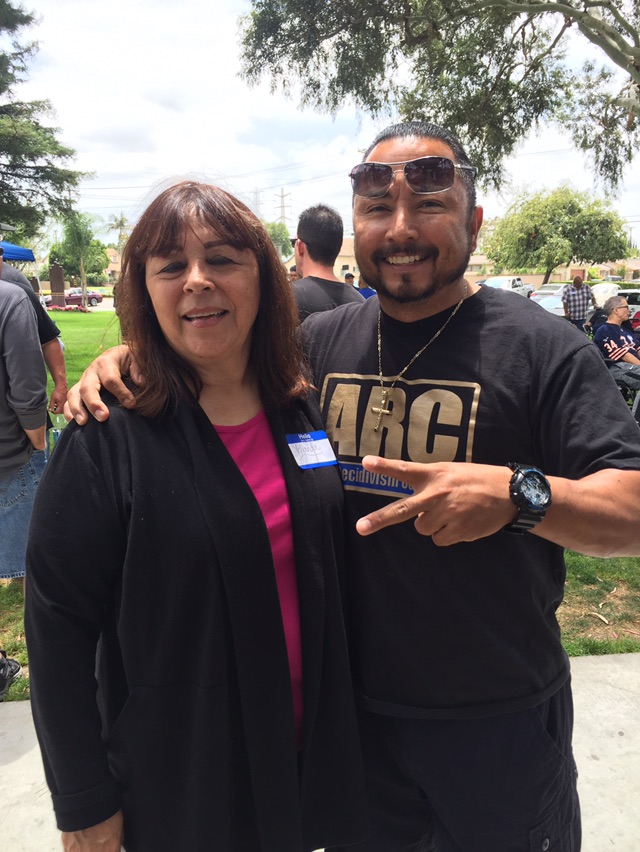
Yolanda Navarro, Legal Assistant with David Garnica ARC

Attorneys Diane Letarte and Marc Norton at ECC BBQ
Yolanda Navarro (middle), the friendly voice of our Law Office
Attorney Letarte with released Client
Attorney Letarte with released Client & his wife
Staff having FUN at the BBQ
Let's not FORGET Vanessa Neilsen-Sloane from LSA who is such a strong Advocate for the Lifers. 
( Lifer Support Alliance - LSA)

Friday, May 13, 2011

In re Vicks 5/11/2011 - Marsy's Law Violates Ex Post Facto Principle - Big Win for Lifers!

In re Vicks (2011) , Cal.App.4th
[No. D056998. Fourth Dist., Div. One. May 11, 2011.]

Click here for the latest on In re Vicks  (Prop. 9 Marcy's Law challenge)

OPINION
McDONALD, J.-
In 1983, Michael Vicks was convicted of two counts of rape in concert, two counts of forcible oral copulation in concert, three counts of kidnapping, one count of kidnapping to commit robbery, and multiple counts of robbery; many of these convictions included true findings on appended firearm enhancements. Vicks was sentenced to a total term of 37 years 8 months to life. Vicks, now 51 years old, has been incarcerated for more than 28 years.
At Vicks's first parole hearing, the Board of Parole Hearings (BPH) found him unsuitable for parole. The BPH found the commitment offense was particularly egregious under many indices and, considering numerous other factors (including Vicks's prior criminal record, his disciplinary record while incarcerated, his failure to gain insight into the commitment offense, and his psychological evaluation), concluded Vicks was not currently suitable for parole. The BPH further concluded a five-year denial of parole was appropriate under the circumstances.
Vicks petitioned the trial court for a writ of habeas corpus, but the court denied the writ, concluding the BPH's decision was supported by some evidence. Vicks then petitioned this court for a writ of habeas corpus. We issued an order to show cause, the People filed a return, and Vicks filed a traverse.
Vicks asserts the BPH's decision to deny parole violated due process because its conclusion that he posed an unreasonable risk of danger to society if released on parole was contrary to the only reliable evidence that he was not currently dangerous. He also asserts the imposition of a five-year deferral, pursuant to the amendments to Penal Code section 3041.5, subdivision (b), adopted after the voters approved Proposition 9, otherwise known as the "Victims' Bill of Rights Act of 2008: Marsy's Law" (hereafter Marsy's Law), cannot be applied to him without violating ex post facto principles.
We conclude the BPH's decision to deny parole was supported by some evidence, pursuant to the guidance provided by In re Lawrence (2008) 44 Cal.4th 1181 (Lawrence) and In re Shaputis (2008) 44 Cal.4th 1241.

We also conclude application of the amendments to Penal Code section 3041.5, subdivision (b), to inmates whose commitment offense was committed prior to the effective date of Marsy's Law violates ex post facto principles.

Friday, December 11, 2020

LA's New DA George Gascón's default policy : DA will not attend parole hearings & will support in writing the grant of parole when the minimum Eligible date has been reached.

George Gascón, A former beat cop, Assistant Chief of the Los Angeles Police Department and elected District Attorney, George Gascon's 40-year career in law enforcemnts has taken him from the streets of LA to the highest ranks of Law Enforcement and the Courtroom.

In his inauguration speech, Gascón said his time as a hard-charging LAPD cop in the 1980s and '90s helped shape his transformation into an advocate for wide-ranging criminal justice reforms. Gascon announced a sweeping range of reforms when he was sworn-in Monday, including no longer seeking the death penalty and not using gang enhancements for sentencing. 

Supporters of Gascon, say he is correct to try to reduce mass incarceration in California and instead seek more rehabilitative solutions in addition to mental-health treatment for offenders.

--------------------------------------------------------------------------------------------------------------

More specifically information (below) to help the incarcerated population; it will be at their Parole Suitability Hearing...... Continue reading the excerpts below.

--------------------------------------------------------------------------------------------------------------

 LA DA recognizes that parole is an effective process to reduce recidivism, ensure public safety, and assist people in successfully rejoining society. The CDCR’s own statistics show that people paroled from life terms have a recidivism rate of less than four percent.

LA DA states: we are not experts on rehabilitation. While we have information about the crime of conviction, the Board of Parole Hearings (BPH) already has this information.

Further, as the crime of conviction is of limited value in considering parole suitability years or decades later, (see In re Lawrence (2008) 44 Cal.4th 1181; In re Shaputis (2008) 44 Cal. 4th 1241, 1255), the value of a prosecutor’s input in parole hearings is also limited. Finally, pursuant to Penal Code section 3041, there is a presumption that people shall be released on parole upon reaching the Minimum Eligible Parole Date (MEPD), their Youth Parole Eligible Date, (YEPD), or their Elderly Parole Date (EPD).

Currently, sentences are being served that are much longer than the already lengthy mandatory minimum sentences imposed. Such sentences are constitutionally excessive. (See In re Palmer (2019) 33 Cal.App.5th 1199.)

This LA’s Office’s default policy is that we will not attend parole hearings and will support in writing the grant of parole for a person who has already served their mandatory minimum period of incarceration, defined as their MEPD, YEPD or EPD.

However, if the CDCR has determined in their Comprehensive Risk Assessment (CRA) that a person represents a “HIGH” risk rating for recidivism, the DDA may, in their letter, take a neutral position on the grant of parole.

--------------------------------------------------------------------------------------------------------

This SEA OF CHANGE is beyond our wildest hopes and dreams as Criminal Defense Attorneys. This is amazing! As a parole specialist, the fact that LA will now be supporting, instead of opposing, the majority of inmates (at parole hearings) is AMAZING.  

NOTE:  For someone who meets the specified criteria (over 15 years incarcerated, age, covid risks, etc) they can make a  direct  request for 1170(d) resentencing at the District Attorney's office. 

As a reminder:

In June 2018, the Legislature passed and Governor Brown signed Assembly Bill(AB) 1812,
which amended Penal Code § 1170(d)(1). The new law took effect immediately. 


Penal Code § 1170(d)(1) authorizes a court  to recall a sentence and resentence a person to a lesser sentence in two circumstances: (1) on the court’s own motion within 120 days after sentencing,  or (2) at any time upon a recommendation from the California Department of Corrections (CDCR) or  the Board of Parole Hearings (BPH) (or, for people in county jails, are commendation from the county correctional  administrator). The  CDCR’s  current  regulations about §1170(d)(1)  sentence  recall recommendations are in the California Code of Regulations, Title 15, §§3076-3076.2.  In  the  past,  the  CDCR  rarely  used  its  authority  to recommend sentence recalls. Now, they should because AB 1812 grants additional funds to the CDCR to investigate potential cases to refer for recall of sentence.


Friday, June 11, 2010

5/12/2010 In re Calderon "INSIGHT" not a factor for SUITABILITY

Court of Appeal First District, Division 2

Case Holding:


Lack of insight is not a factor indicative of unsuitability for parole. The Governor reversed the parole board's decision to grant parole to petitioner, who had committed a murder during the course of a robbery. The Court of Appeal reversed. Besides the gravity of the crime, the Governor found petitioner unsuitable based on continued criminal behavior in prison and his "lack of full insight" into the effects of his prior substance abuse.

The court found the Governor's reasons did not withstand scrutiny under the In re Lawrence (2008) 44 Cal.4th 1181 standards. This crime was no more serious than other second-degree murders. Relevant post-conviction factors do not show current dangerousness since petitioner's brief association with a prison gang ended many years ago. And his alleged "lack of insight" on substance-abuse effects has no basis in the record.

After In re Shaputis (2008) 44 Cal.4th 1241, where the phrase "lack of insight" was mentioned in upholding the Governor's decision on parole ineligibility, it has become the Governor's new mantra. But, it is not even among the factors indicative of unsuitability in the regulations. Lack of insight is probative of unsuitability only to the extent it is supported by the record and rationally indicative of current dangerousness.